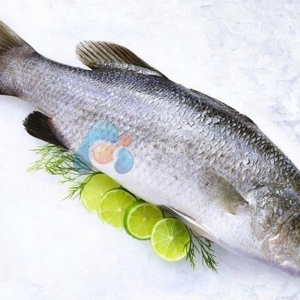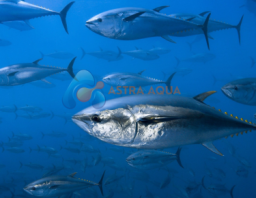
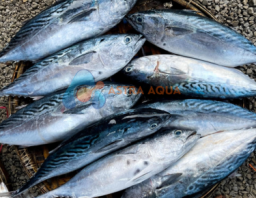
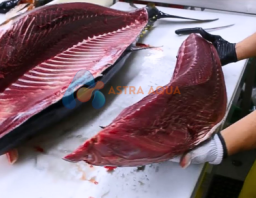
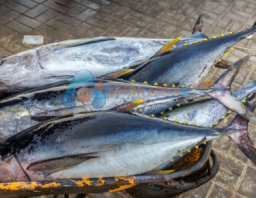
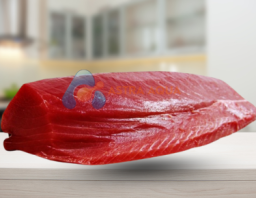
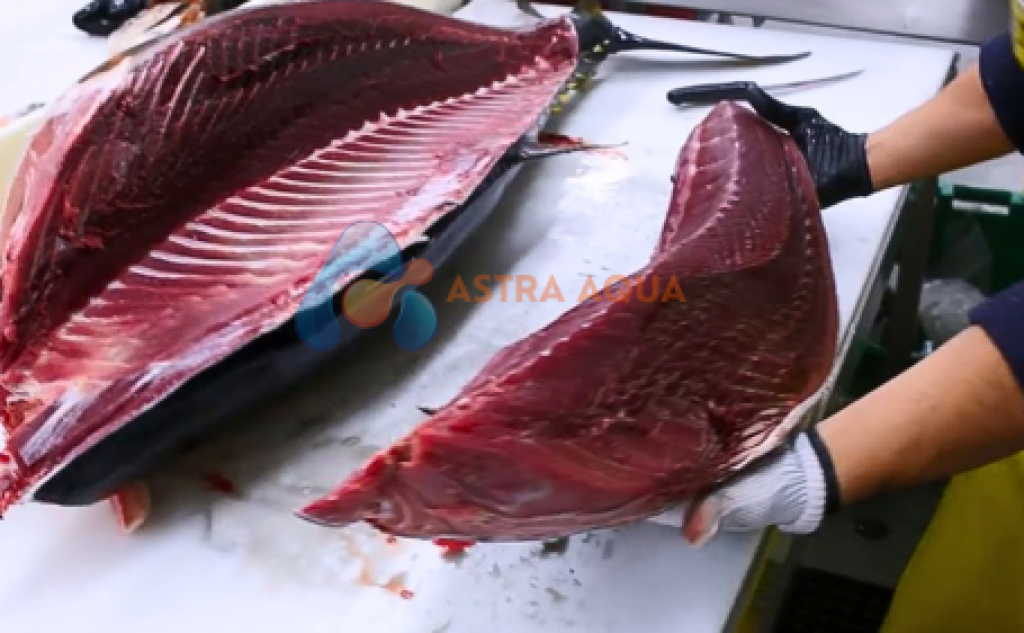
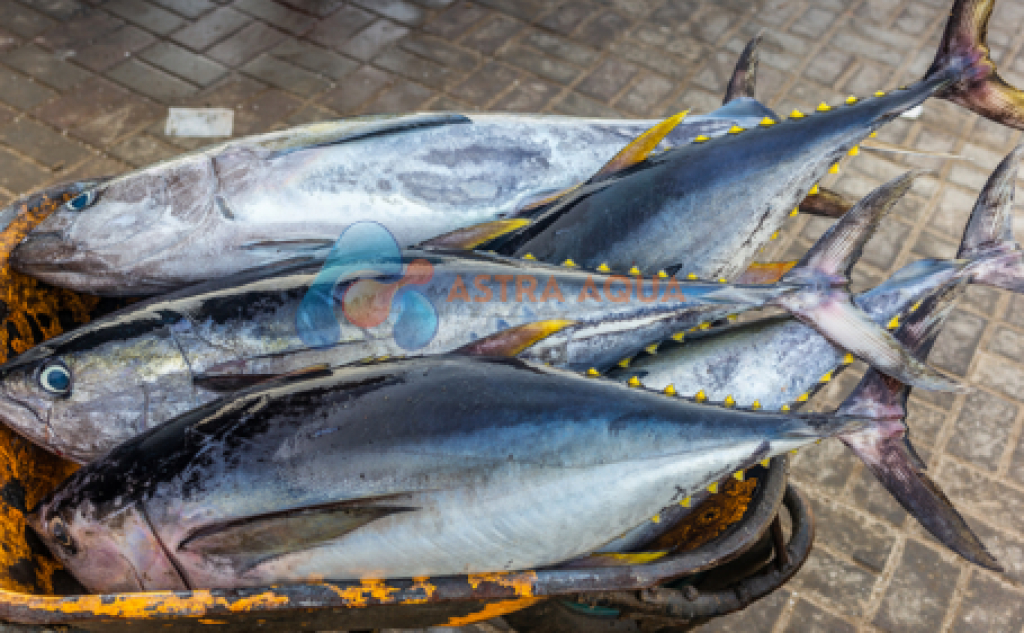
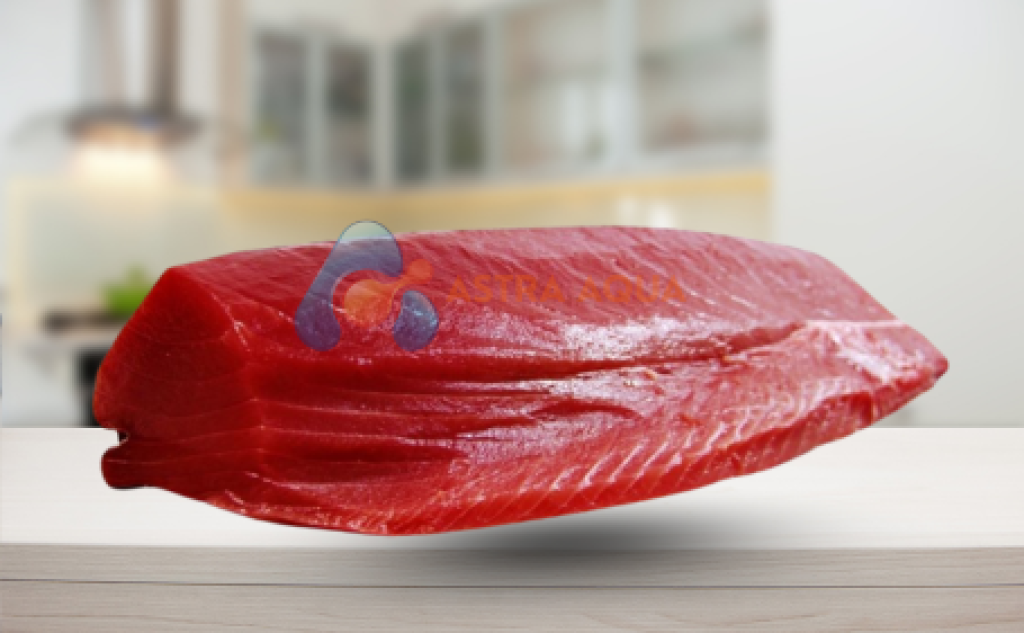
Whole Round Tuna with firm red flesh, ideal for sashimi, steak, and international processing. Astra Aqua is a trusted supplier from Vietnam, providing a stable supply, internationally certified quality, and full-service export solutions at competitive costs.
📞 Hotline / Zalo: (+84) 938 925 489
📧 Email: sam.le@astraaquaco.com
In the global seafood market, tuna is considered one of the most strategic products thanks to its high economic value, strong consumer demand, and diverse applications in food processing. Among them, Whole Round Tuna is highly favored by importers, processing factories, and international seafood distribution chains. The reason is clear: the fish is kept intact, without removing any part of its body, preserving its full commercial value, muscle structure, and natural flavor.
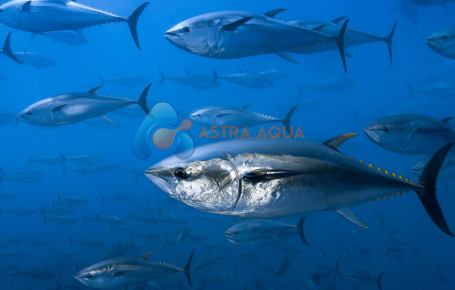
Whole Round Tuna is usually caught in tropical and subtropical waters, then stored in ice or blast frozen to maintain freshness. The product is distributed to sashimi factories, loin-cutting facilities, canning manufacturers, or directly to restaurant chains specializing in sushi, tuna steak, and fine dining. Therefore, in the export market, whole tuna is not just a common commodity, but the foundation for creating a wide range of value-added products.
Today, countries such as Japan, South Korea, the United States, and European nations are the world’s largest tuna consumers. They prefer whole tuna because it allows them to control quality from the source, freely cut and classify different parts according to usage: the loin/meat for sashimi, belly for toro, and the head and bones for broth or industrial processing. This makes whole tuna a strategic product in the international seafood export industry.
Whole tuna refers to tuna that is kept in its natural form after being caught, without undergoing processing steps such as filleting, loin cutting, or canning. It can be stored fresh (iced) or frozen whole. In some cases, the fish may be gutted or lightly head-trimmed for easier transportation, but it is still considered “whole” as long as the body remains intact without being separated into portions.
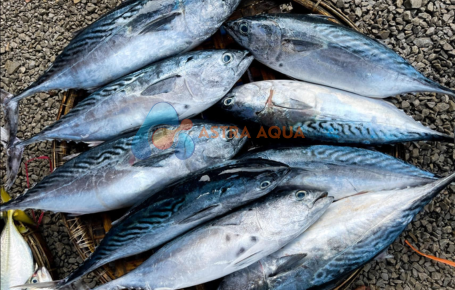
The value of whole tuna lies in its natural, unaltered state. It is not affected by processing methods that may cause loss of moisture, natural fat, or muscle firmness. With this form, buyers can easily evaluate the fish's quality through skin color, eye clarity, and muscle structure after thawing — minimizing risks when importing in large quantities.
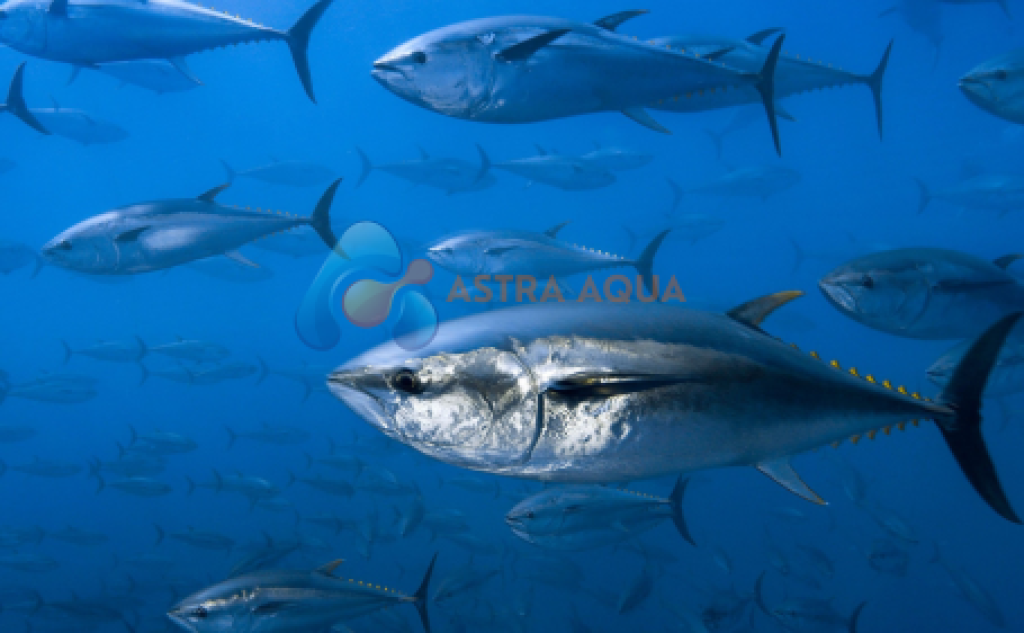
Tuna has an elongated, streamlined body with a natural hydrodynamic shape that reduces water resistance, allowing it to swim at high speeds. The fish has dark blue or metallic gray skin along the dorsal side that gradually transitions to a silvery belly. The second dorsal fin and finlets along the back and underside are distinctive features that help differentiate tuna from other fish.
Key physical characteristics of whole tuna include:
Long, firm body with well-developed muscles due to constant activity in the open ocean.
Smooth skin in shades of blue-gray or silver, without thick slime like coastal fish species.
Large, pointed head; round, clear eyes (in fresh fish); mouth showing small sharp teeth.
Crescent-shaped tail fin enabling rapid and flexible swimming, reaching speeds up to 70 km/h.
Deep red or bright red flesh, completely different from white-fleshed species such as cod or salmon.
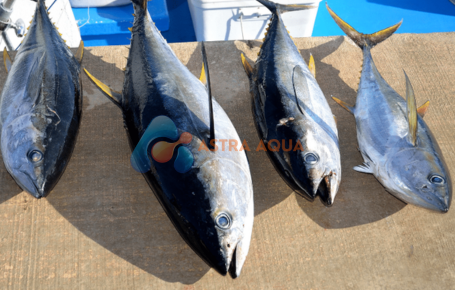
One of the most distinctive traits of tuna is its ability to maintain a body temperature higher than the surrounding seawater due to a specialized vascular system beneath the skin. This results in firmer flesh, high myoglobin levels, low moisture content, and excellent elasticity — which is why whole tuna is highly valued for premium sashimi and sushi.
Tuna is one of the most nutrient-dense marine fish. The nutritional value is not only found in its flesh but also in other parts such as the eyes, liver, spine, and fatty belly (toro).
On average, per 100g of fresh tuna meat contains:
23–25g of pure protein — essential for muscle development and cell regeneration.
1–5g of fat — mainly omega-3 (EPA, DHA), beneficial for heart and nervous system health.
B-group vitamins (B3, B6, B12) — essential for energy metabolism.
Key minerals such as iron, zinc, phosphorus, selenium, and magnesium.
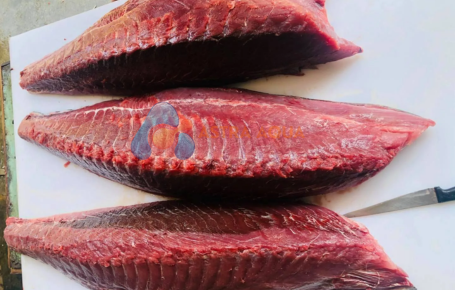
Especially, the tuna belly (toro) contains significantly higher levels of DHA and EPA compared to freshwater fish. This is why countries like Japan, South Korea, and European nations regard whole tuna as the “red gold of the ocean.”
Health Benefits:
Heart health: Omega-3 reduces bad cholesterol, prevents atherosclerosis and stroke.
Brain and vision development: DHA improves memory, especially in children and the elderly.
Immunity boost: Selenium and vitamin D support antioxidant activity.
Ideal for diets: Low fat, high protein, zero carbohydrates.
International markets classify whole tuna based on species, size, and processing purposes. The most popular species include:
Yellowfin Tuna (Thunnus albacares)
Weight: 30–70 kg/fish.
Light red meat, milder flavor compared to bigeye tuna.
Commonly used for sashimi, canned tuna, and loins.
Bigeye Tuna (Thunnus obesus)
Larger size, can reach 100–180 kg/fish.
Deep red meat with high fat content, especially in the belly — chu-toro and o-toro.
Highly valued in premium Japanese sushi markets.
Bluefin Tuna (Thunnus thynnus)
Known as the “king of tuna.”
Can weigh 200–400 kg or more.
Extremely expensive — one fish was auctioned for over USD 1.8 million in Tokyo.
Mainly used for premium sashimi and sushi.
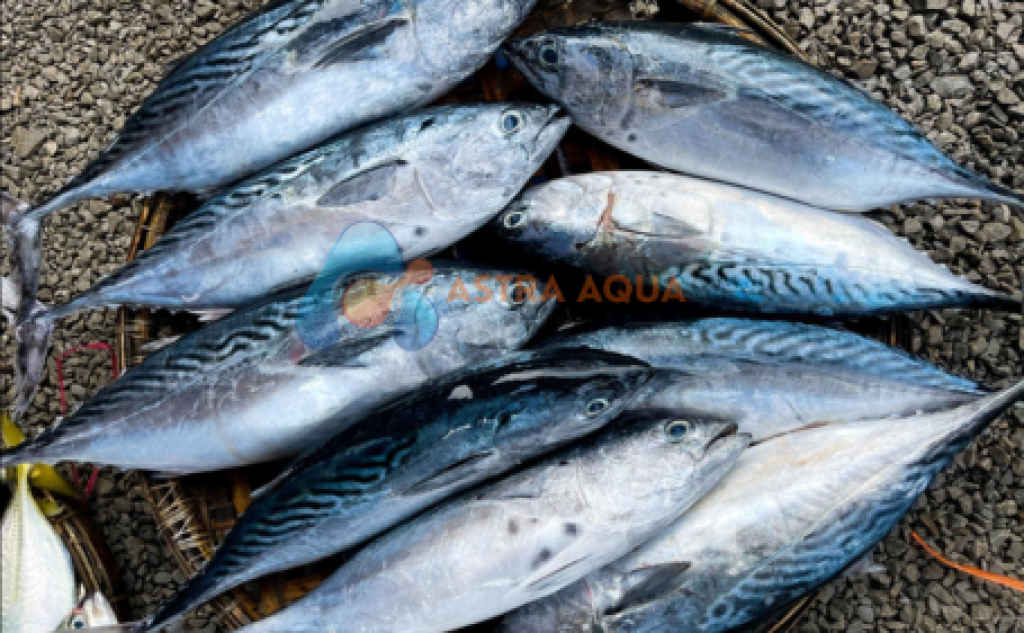
Skipjack Tuna (Katsuwonus pelamis)
Smaller size: 3–6 kg/fish, abundant in the Pacific Ocean.
Primarily used for canned tuna and surimi.
Whole tuna is a versatile ingredient used in both simple and gourmet dishes.
Japanese Cuisine:
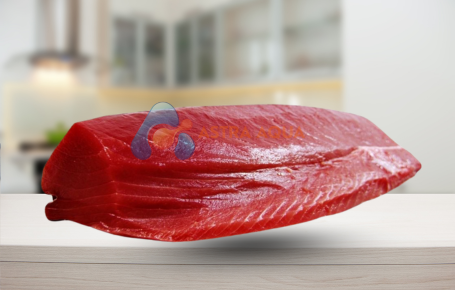
Sashimi: Thin slices of raw tuna, often from akami (lean meat), chu-toro (medium-fat belly), or o-toro (high-fat belly).
Sushi nigiri: Tuna placed on vinegared rice, usually served with soy sauce and wasabi.
Tataki: Lightly seared tuna — cooked on the outside, raw inside.
Mediterranean & European Cuisine:
Tuna steak: Pan-seared, typically served medium rare.
Tuna preserved in olive oil: Popular in Italian and Spanish canning industries.
Salad Niçoise (France): Includes tuna, eggs, potatoes, green beans, and olives.
American & Global Cuisine:
Poke Bowl (Hawaii): Raw tuna mixed with soy sauce, sesame oil, seaweed, onions.
Tuna burgers, tuna tacos: Modern fusion adaptations.
There are three key reasons why whole tuna is preferred in the international market:
Maximized Processing Efficiency
Factories in Japan, South Korea, and the EU prefer whole tuna to segment it into akami, chu-toro, fins, eyes, etc., maximizing the value of each part.
Preserved Freshness
When transported as whole fish and stored at -40°C or in refrigerated seawater (RSW), tuna maintains better flesh structure compared to pre-processed forms.
High Economic Value
Whole tuna, especially bigeye or bluefin, offers much higher profit margins than white-fleshed fish or farmed fish.
Many companies in Vietnam, Indonesia, and the Philippines have invested in offshore fishing fleets dedicated to this market.
In a highly competitive global seafood market, choosing a tuna supplier is not only about pricing but also supply stability, product quality, export capability, and professional service. ASTRA AQUA INT'L CO., LTD meets all these criteria, making it a trusted partner for international importers and distribution systems.
Stable supply — traceable origin
International quality standards
Competitive pricing — optimized to partner needs
Professional service — A-to-Z export support
ASTRA AQUA INT'L CO., LTD
📍 Address: 318 Phan Đình Phùng, Cầu Kiệu Ward, Phú Nhuận District, Ho Chi Minh City, Vietnam
📞 Hotline / Zalo: (+84) 938 925 489
📧 Email: sam.le@astraaquaco.com | sales01@astraaquaco.com
🌐 Website: https://astraaquaco.com
Global
Partnership
DIVERSITY
PRODUCTS
DELIVERY
FAST
QUALITY
TOP-NOTCH

ASTRA AQUA INTERNATIONAL CO., LTD
Address: 318 Phan Đinh Phung, Cau Kieu Ward, Ho Chi Minh City, Vietnam
Hotline: (+84) 938925489
Email: sales01@astraaquaco.com
Website: https://astraaquaco.com
Tax Code: 0319091146