

Pangasius Import Standards in Korea – Strict Requirements and Solutions from Astra Aqua
Overview of Customs and Food Safety Regulations in South Korea
South Korea is one of the countries with the strictest technical barriers and seafood import standards in the world. To successfully penetrate this market, exporting businesses must overcome a series of rigorous inspections regarding origin, aquaculture water quality, and food safety standards throughout the processing stages.
Contact us now: 0938 925 489
Understanding these challenges, Vietnamese Pangasius are continuously improving to meet all technical barriers. With extensive export experience, Astra Aqua is proud to offer products that comply 100% with all standards, enabling customers to confidently pass the strict customs clearance processes in the land of kimchi.
Microbiological and Chemical Regulations in Pangasius Import Standards
Strict Control of Antibiotic Residues and Banned Chemicals
According to the regulations of the South Korean Ministry of Food and Drug Safety (MFDS), all imported Pangasius shipments must test negative for banned antibiotics such as Enrofloxacin, Ciprofloxacin, and Nitrofurans. Any violation will result in the shipment being destroyed or returned immediately.
To meet this standard, farming areas must implement biological disease control processes. The cessation of medication use prior to harvest is strictly monitored, ensuring that exported products are absolutely clean and safe for consumers in South Korea.
Microbiological Standards for Pathogens in Seafood
In addition to chemicals, microbiological indicators such as Salmonella, E.coli, Listeria monocytogenes, and Vibrio cholerae are also rigorously tested. The permissible limit is usually zero for dangerous pathogens, requiring processing plants to maintain an absolutely sterile environment during packaging.
Contact us now: 0938 925 489
Sensory and Packaging Standards for Pangasius Imports
Requirements for Color, Aroma, and Meat Texture
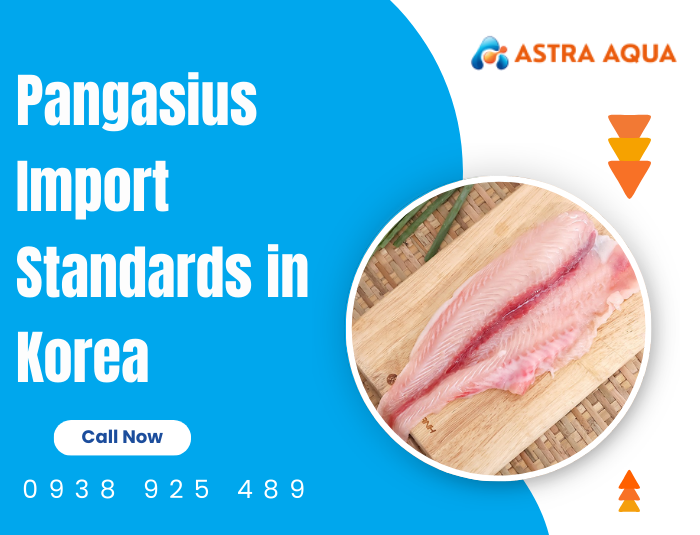
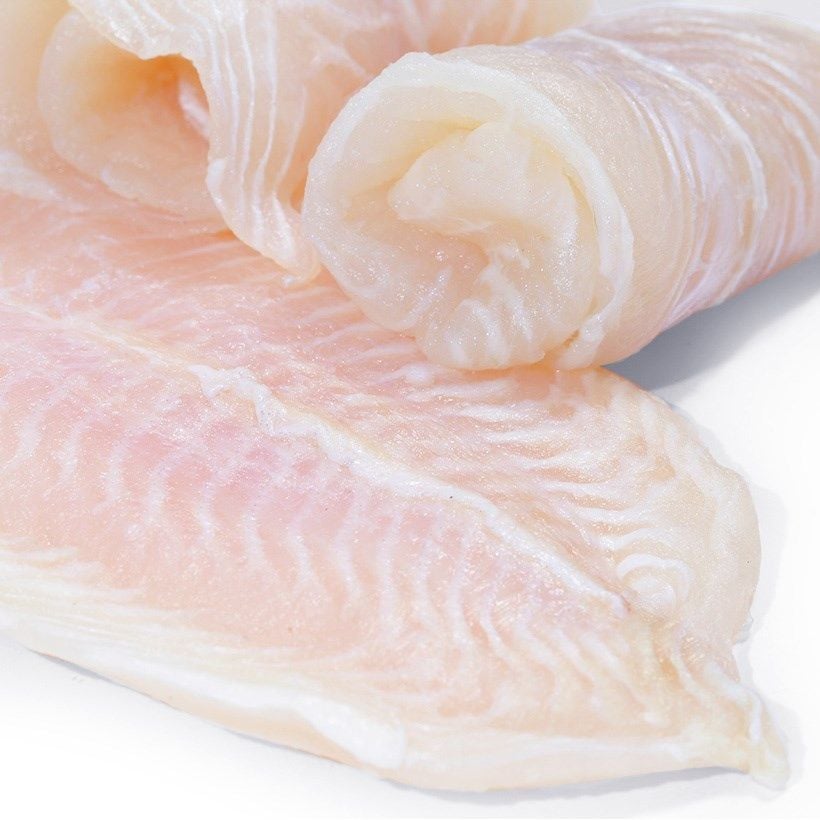
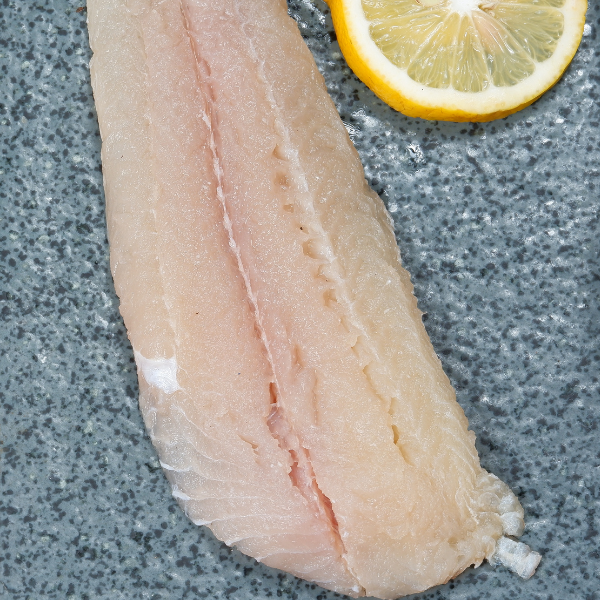
South Korea places particular emphasis on aesthetic appeal and freshness. A Pangasius shipment meeting the standards must have a naturally bright white flesh color and no muddy odor. Upon thawing, the fish meat must be firm, with good elasticity, and the water loss from glazing must be as initially declared.
Rapid IQF freezing at deep sub-zero temperatures plays a crucial role in maintaining these sensory characteristics. The skinning and boning (boneless, skinless) process must also be meticulously performed to ensure no residual small bones or excess fat affect the dish quality.
Contact us now: 0938 925 489
Strict Regulations on Labeling and Packaging
Packaging must not only be sturdy and withstand deep cold temperatures but also comply with South Korean labeling laws. Information in Korean is mandatory, including product name, ingredients, net weight, production date, expiry date, storage instructions, and clear importer information.
Certificates Required for Pangasius Import Standards
Health Certificate and Certificate of Origin (C/O)
To clear customs, shipments must be accompanied by a Health Certificate issued by the competent Vietnamese authority. Astra Aqua always prepares transparent and accurate documentation to ensure importers do not face warehousing issues.
Furthermore, the Certificate of Origin (C/O) Form AK or Form VK is a critical document that allows South Korean importers to benefit from preferential tariffs under the Vietnam-Korea Free Trade Agreement (VKFTA), optimizing import cost calculations.
International Quality Management System Certifications
Major supermarkets and distribution chains in South Korea often require processing plants to hold international certifications such as HACCP, BRC, IFS, or ASC certification for farming areas. These certifications serve as a passport, affirming sustainable development and a brand's commitment to quality.
Astra Aqua – The Partner Perfectly Meeting Pangasius Import Standards
Accompanying Clients Through the Customs Clearance Process
The preparation of customs documentation must be free of even the smallest errors. Our experienced import-export team always conducts cross-checks of documents (B/L, Invoice, Packing List) before goods arrive at Busan or Incheon ports to ensure a smooth process.

Contact us now: 0938 925 489
Maintaining an Accurate Cold Chain Supply
Storage standards during transportation require refrigerated containers to be maintained at temperatures between -18°C and -20°C. We collaborate with reputable shipping lines that have continuous temperature monitoring systems to ensure the quality of goods remains intact throughout the sea voyage.
Continuously Updating Regulatory Changes from MFDS
South Korea frequently updates its food safety testing standards. Astra Aqua proactively stays informed and adjusts its internal control processes to ensure all exported shipments fully and safely meet the latest import standards.
Current Status of Customs Inspections Under Pangasius Import Standards
Random Inspection and Enhanced Inspection Regimes
Typically, South Korean customs conduct random sample inspections. However, if a history of violations is found from a specific factory, they will implement an enhanced inspection regime (mandating 100% inspection of shipments). With a clean export record, shipments from Astra Aqua always pass with ease.
Solutions to Prevent Risks of Port Detention
To avoid costly port detentions, every shipment before export is rapidly tested in our in-house laboratory and samples are sent to independent inspection centers (such as SGS, Vinacontrol). This diligence acts as a strong shield for the reputation of both parties.
Handling Goods That Do Not Meet Pangasius Import Standards
In the event of a shipment failing to meet the required standards, South Korea's handling regulations are very strict. Businesses are compelled to re-export or destroy the shipment under the supervision of competent authorities. Therefore, choosing a reputable supplier is the only way to minimize these economic risks.
Contact us now: 0938 925 489
Benefits of Strict Compliance with Import Regulations
Affirming Brand Reputation in the International Market
Overcoming South Korea's technical barriers signifies that product quality has reached a global standard. This is a strong guarantee that helps seafood businesses expand opportunities to penetrate other premium, demanding markets such as Japan, the EU, or the USA.
Building Sustainable Strategic Partnerships
The stability of product quality and safety is the core foundation for South Korean importers to confidently place long-term orders. Compliance with regulations ensures smooth supply chain operations, bringing sustainable profits to both producers and domestic distribution companies.
Contributing to Public Health and Consumer Well-being
The ultimate goal of these stringent standards is to protect human health. Providing clean, safe products is not only a business obligation but also a noble social responsibility for seafood processing and exporting companies in the international arena.
Evaluating Supplier Capabilities to Meet Standards
Selecting the right supplier from Vietnam is the deciding factor for the success or failure of import transactions. South Korean partners should prioritize factories with closed-loop processes, transparent documentation, and a commitment to quality, like Astra Aqua, for sustainable collaboration.
Partner with Astra Aqua to Conquer the South Korean Market
With deep understanding of the legal system and MFDS standards, Astra Aqua confidently serves as a strong bridge to elevate Vietnamese seafood globally. We continuously update technology and processing procedures to meet the ever-increasing demands of the market.
Quality risk management is no longer a burden when you partner with a professional team. Let us handle the complex technical and documentation aspects, allowing you to focus entirely on developing market share and expanding domestic seafood distribution channels.
Contact Us for In-depth Pangasius Import Standards Consultation
If your esteemed partners are facing import procedure challenges or are seeking a source of 100% standard-compliant Basa fillets for export to South Korea, please contact us immediately. Our team of experts will provide thorough consultation and offer the most suitable supply chain solutions for your business.
10 Frequently Asked Questions About Pangasius Import Standards to South Korea
1. Which antibiotics does the South Korean MFDS require testing for in Pangasius import standards?
Answer: They require strict testing of Fluoroquinolones (Enrofloxacin, Ciprofloxacin), Nitrofurans, Chloramphenicol, and Malachite Green for Pangasius imported from Vietnam.
2. What is the permissible net weight deviation for penalties in South Korea?
Answer: South Korea has very strict regulations against commercial fraud. The actual net weight must not be less than the allowed tolerance compared to the weight stated on the packaging; this tolerance is usually extremely small.
3. What information is required on Korean-language supplementary labels for Pangasius import standards?
Answer: Supplementary labels must include the product name, ingredients, importer's name, manufacturer's name, expiry date, storage conditions (-18°C), and allergen warnings for seafood.
4. Which C/O form is used to benefit from tariff preferences when importing into South Korea?
Answer: To receive reduced or exempt import duties, businesses must request the supplier to present a Certificate of Origin (C/O) Form AK (ASEAN - Korea) or Form VK (Vietnam - Korea).
5. If a Pangasius shipment fails microbiological standards, can it be reprocessed?
Answer: Typically, for dangerous pathogens like Salmonella or Listeria, South Korea does not permit reprocessing; the shipment must be destroyed or re-exported from its territory.
6. How long is a Health Certificate (HC) valid?
Answer: The Health Certificate issued by the competent Vietnamese authority (NAFIQAD) must be an original, issued for each specific shipment, and the issuance date must correspond with the bill of lading's shipping date.
7. Is the glazing percentage included in the taxable weight?
Answer: Import duties are calculated based on the commercial invoice value. Customs authorities will meticulously check the net weight after thawing the glazing layer to compare with the customs declaration.
8. What is the inspection process at the port for a company importing Pangasius for the first time?
Answer: The first imports by a company are typically subject to strict documentation review and may involve 100% actual sample testing for all food safety parameters.
9. Do food-contact packaging materials for fish require certification of safety?
Answer: Yes. Food-contact packaging materials (such as PA/PE films) must have a safety certification for packaging materials in compliance with South Korean legal standards and regulations.
10. How to resolve disputes regarding quality with a supplier?
Answer: International independent inspection bodies (such as SGS, Intertek) should be designated as arbitrators in the foreign trade contract. The test results from this third party will serve as the strongest legal basis for resolving claims.
Astra Aqua Contact Information
- Astra Aqua
- Address: 318 Phan Dinh Phung, Cau Kieu Ward, Ho Chi Minh City, Vietnam
- Hotline: 0938 925 489
- Email: sam.le@astraaquaco.com
- Website: https://astraaquaco.com
- Tax Code: 0319091146
Comprehensive compliance with South Korean Pangasius import standards is not just a mandatory requirement but also a commitment to quality. Pangasius from Astra Aqua will always be the absolute confident choice for the Northeast Asian market.