

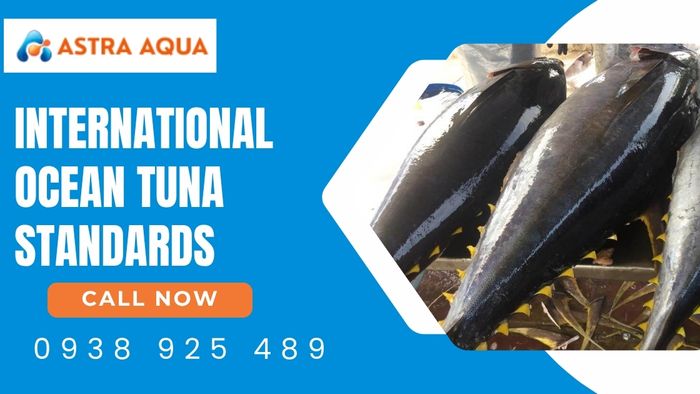
International Ocean Tuna Standards | Astra Aqua
The Importance of Applying International Standards to Tuna
On the global commercial stage, offshore caught seafood constantly faces extremely rigorous technical barriers. Leading importing countries such as the United States, Japan, and the European Union (EU) continuously establish strict food safety and hygiene regulations to ensure the absolute health of consumers for raw consumption items like sashimi.
Contact us: 0938 925 489
To overcome these legal challenges, Vietnam's export ocean tuna must adhere to strict discipline from fishing to processing. With superior quality management capabilities, Astra Aqua is proud to be a reliable bridge, supplying seafood shipments that pass the most stringent kiểm định (inspections) of international food regulatory bodies.
Current International Standard Evaluation Systems for Tuna
Biochemical and Microbiological Safety Indicators for Tuna Meat
The prerequisite for shipment clearance is controlling Histamine levels. This is a toxin produced when seafood is not properly preserved. According to FDA (US) standards, Histamine levels in tuna flesh must be below 50ppm. Any exceedance will result in the immediate destruction of the shipment at the port of entry.
Concurrently, indicators for pathogenic bacteria such as Salmonella, Listeria, and heavy metal residues (mercury, lead) are screened using modern laboratory analysis methods. Perfectly meeting these parameters affirms absolute quality, making the product eligible to serve the elite at Michelin-starred restaurants.
Ultra-Low Temperature Standards for Tuna
For products intended for raw consumption, preservation methods are crucial. Global standards require deep freezing systems at -60 degrees C. This deep sub-zero temperature locking technique completely inhibits microbial growth, perfectly preserving protein structure and natural red color throughout long voyages at sea.
Contact us: 0938 925 489
Astra Aqua – Premium Fresh Tuna Supplier
Certified Processing Plant System
To be allowed into global supermarket chains, production facilities must pass independent audits. All our premium fresh tuna shipments originate from factories holding BRC, IFS, and HACCP certifications, demonstrating a comprehensive food safety risk control process.
Our Quality Control (QC) team conducts continuous 24/7 supervision throughout every stage of gutting, bleeding, and filleting. The sterile processing environment and intervention of high-tech machinery thoroughly eliminate the risk of cross-contamination, providing absolute peace of mind to our trade partners across five continents.
Contact us: 0938 925 489
Provision of Fishing Traceability Permits
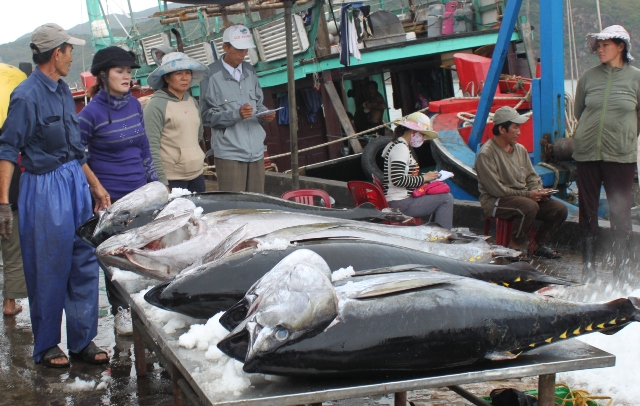
Origin transparency is a mandatory requirement for the European Union. We provide a valid Catch Certificate for every shipment, proving that the seafood was caught in authorized fishing grounds, without violating prohibited sea areas, and in full compliance with international maritime law.
Business Advantages of Standard Frozen Tuna Loins
Absolute Reliability in Specifications and Weight
Professionalism in international trade stems from honesty. All Net Weight specifications are fully guaranteed by Astra Aqua. We strongly oppose fraudulent glazing practices, ensuring importers can calculate their cost of goods transparently.
Along with this are clear commercial warranty terms. Any production-related discrepancies affecting the weight or quality of the shipment will be adequately compensated. This commitment firmly protects the profits and reputation of distributors in their domestic markets.
Maximizing Product Value in the Market
Meeting the world's most stringent standards is the leverage to enhance product value. Standardized products not only facilitate customs clearance but also easily penetrate high-end retail channels, offering superior profit margins compared to mass-market seafood.
Logistics Standards for Sashimi-Grade Whole Tuna
Handling Compliant Customs Clearance Documentation
Import documentation is a critical passport. Our highly skilled documentation team meticulously prepares all necessary documents, including Health Certificates, Certificates of Origin (C/O), and microbiological analysis certificates, enabling customs authorities to promptly release containers.
Contact us: 0938 925 489
Operating Deep-Freeze Reefer Container Supply Chains
To maintain raw consumption quality, sea shipments must use specialized Reefer containers set at -60 degrees C. We partner with leading global shipping corporations to ensure continuous power supply for refrigeration, preventing any temperature shock that could damage the meat structure.
24/7 Electronic Shipment Tracking System
With a professional service platform, all partners are provided with a Bill of Lading to track the vessel's itinerary via satellite. This proactive information sharing allows importing businesses to easily coordinate warehousing and arrange unloading personnel as soon as the ship docks at the destination port.
Popular Export-Quality Tuna Formats
Premium Cleaned Whole Tuna (H&G / H-O-N)
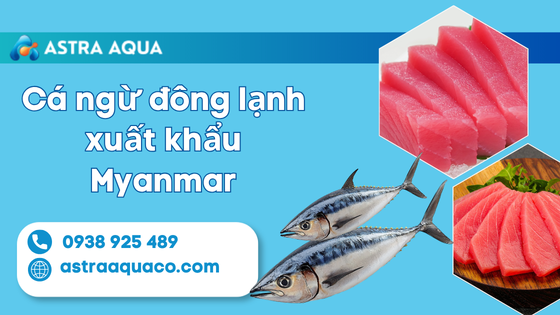
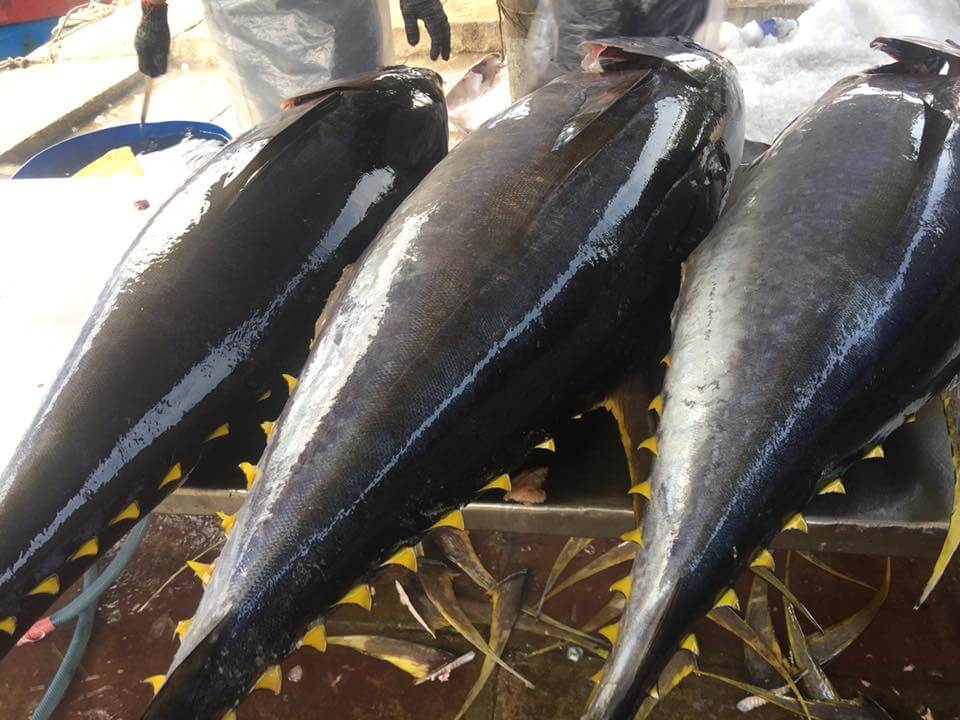
This is the most valuable raw material at international auction markets. Astra Aqua's headless and gutted whole tuna is the preferred choice for renowned chefs in Japan, where the art of filleting fish live in front of diners is highly esteemed.
Saku Loin Blocks for Sushi Restaurants
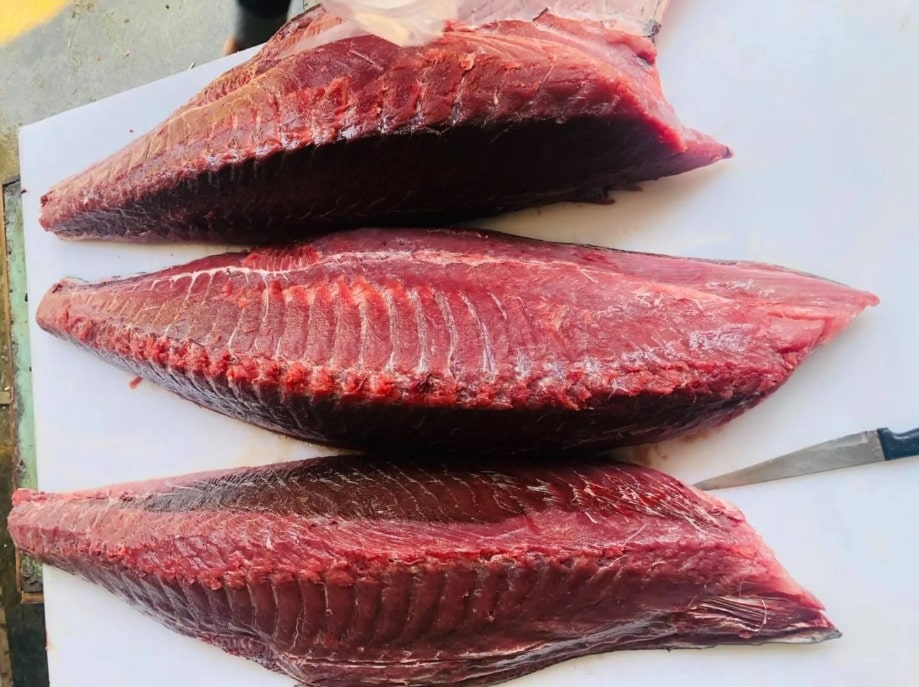
Perfect back loins are shaped into rectangular blocks (Saku Blocks). This frozen tuna loin product significantly reduces preparation time for chefs, allowing for uniform sashimi slices and optimizing restaurant operations.
Modern Poke Cubes Trend
Catering to the trend of convenient cuisine, products are diced into uniform cubes and vacuum-sealed. This is an excellent ingredient solution for fast-food outlets specializing in seafood salads, enabling precise portion control without requiring highly skilled kitchen staff.
Contact us: 0938 925 489
Ecological Protection Foundation for Standard Tuna
Environmental Protection and Animal Conservation Certifications
International standards extend beyond meat quality. European and American customers require export-quality tuna to have Dolphin Safe certification and aim for MSC standards, proving that fishing gear is safe and does not harm marine mammals.
Packaging Specifications for Deep-Freeze Temperature Materials
Professionalism is reflected in packaging. We use safe food-grade PE film combined with reinforced insulated EPS boxes. This prevents oxidation that causes the fish meat to darken and protects the product from cracking under the -60 degrees C ultra-low temperature environment.
Responsible Fishing Practices (Anti-IUU)
We are committed to complying with international agreements against Illegal, Unreported, and Unregulated (IUU) fishing. Clear logging of fishing activities allows for transparent fishing location traceability, contributing to the conservation of marine ecosystems and the sustainability of renewable resources for future generations.
Capacity to Meet Ocean Tuna Standards
With impressive export volumes and a 100% successful customs clearance rate, Astra Aqua is proud to be a key link in the global seafood supply chain. We are always ready to meet the most challenging technical barrier issues from any discerning import market.
Development Orientation for International Standard Tuna Value Chains
International food safety laws will continue to tighten. Anticipating this trend, Astra Aqua continuously upgrades its internal laboratory systems and automates its freezing lines, ensuring product quality always stays one step ahead of regulatory requirements.
Our mission is to bring the finest of the ocean to the world stage. With an absolute commitment to standards and services, we aspire to build a strong, profitable, and sustainably enduring trade alliance with international partners.
Consultation on Sashimi-Grade Whole Tuna Import Standards
Importing corporations, major supermarkets, and global culinary chains seeking sashimi-grade whole tuna with international certifications are welcome to contact us. We are ready to provide CIF quotes and comprehensive documentation support for the smoothest customs clearance.
10 Frequently Asked Questions About International Standards for Ocean Tuna
1. What documents are mandatory for tuna exported to the EU market?
Answer: Besides C/O and Health Certificate, the EU market requires a Catch Certificate to prove the shipment fully complies with anti-IUU fishing regulations.
2. What is the specified Histamine level in tuna?
Answer: To ensure safety for raw consumption (sashimi), most international standards, such as the US FDA, stipulate that Histamine levels in tuna muscle must be extremely low, below 50ppm.
3. Why must ocean tuna preservation standards be at -60 degrees C?
Answer: The -60 degrees C threshold is mandatory to completely kill parasites and inhibit Myoglobin oxidation, helping the fish meat retain its bright ruby red color as if freshly caught.
4. What is the significance of the Dolphin Safe certification in tuna trade?
Answer: This is an ecological certification issued by the Earth Island Institute, proving that the fishing method using pole and line does not harm or kill dolphins, a standard that Americans are very concerned about.
5. What tools do importers use to assess tuna color?
Answer: In the international market, the color quality of tuna slices is often assessed using a SalmoFan color chart; bright red color scales achieve the highest scores and command the highest commercial prices.
6. What are the export frozen tuna packaging standards?
Answer: Products must be wrapped in specialized food-grade PE film, vacuum-sealed (IVP), and placed in multi-layer, moisture-resistant, durable cartons for maximum product protection.
7. What happens if customs detects mercury residues in tuna?
Answer: Heavy metals are strictly prohibited. If test samples exceed the permissible limits set by Codex Alimentarius, the entire shipment will be immediately suspended, returned to the country of origin, or destroyed at the port.
8. How does the Ikejime technique affect tuna quality standards?
Answer: This is a Japanese humane slaughter method that minimizes stress for the fish, inhibiting the release of lactic acid into the muscle. This technique helps tuna achieve the highest quality standards, retaining its sweetness and firmness.
9. Is the L/C payment method the safest standard?
Answer: In international seafood trade with large transaction values, a Sight Letter of Credit (L/C) is considered the safest payment standard, maximally protecting the financial interests of both buyer and seller.
10. How can one verify the tuna standards from Vietnam before purchasing?
Answer: International partners can request sample testing. We will package samples with dry ice for preservation and send them via express flight (FedEx/DHL) for customers to test biochemical indicators at their own labs.
Contact Information Astra Aqua
- Astra Aqua
- Address: 318 Phan Dinh Phung, Cau Kieu Ward, Ho Chi Minh City, Vietnam
- Hotline: 0938 925 489
- Email: sam.le@astraaquaco.com
- Website: https://astraaquaco.com
- Tax Code: 0319091146
Strictly adhering to global inspection systems, Astra Aqua's international standard tuna source is confident to be the golden key for your business to conquer any demanding market.